Most costly gutter-related damage doesn’t start as an emergency. It starts with something small that feels manageable in the moment. A little overflow here. A slow drain there.
Homeowners may feel they can handle these quick “bandage” fixes, but before you know it, rain and hurricane season have passed. The holidays roll in. Schedules fill up. Suddenly, those small repairs feel easy to push off until the next rainy season, right? Wrong!
In Charleston, South Carolina, that delay often comes at a cost. Our coastal winter rain has a way of turning “we’ll get to it later” issues into much bigger problems before homeowners realize what’s happening. Local gutter companies like ours know that timely repairs (even in winter) play a major role in protecting your home and minimizing headaches.
Why are Charleston’s wet winters so hard on gutters?
Charleston winters may be mild, but they’re consistently wet. Instead of short, intense storms followed by long dry stretches, winter rain in the Lowcountry often arrives in steady waves, sometimes days apart, sometimes back-to-back.
According to National Oceanic and Atmospheric Administration (NOAA) climate data, the Charleston area averages between 3 and 3.4 inches of rain per month during winter, much of it spread across multiple rain events. That pattern gives gutter systems very little time to fully dry out between storms.
When gutters already have minor issues, ongoing moisture exposure puts those weaknesses to the test. Winter rain tends to expose problems like:
- Slow drainage or standing water that doesn’t evaporate between storms
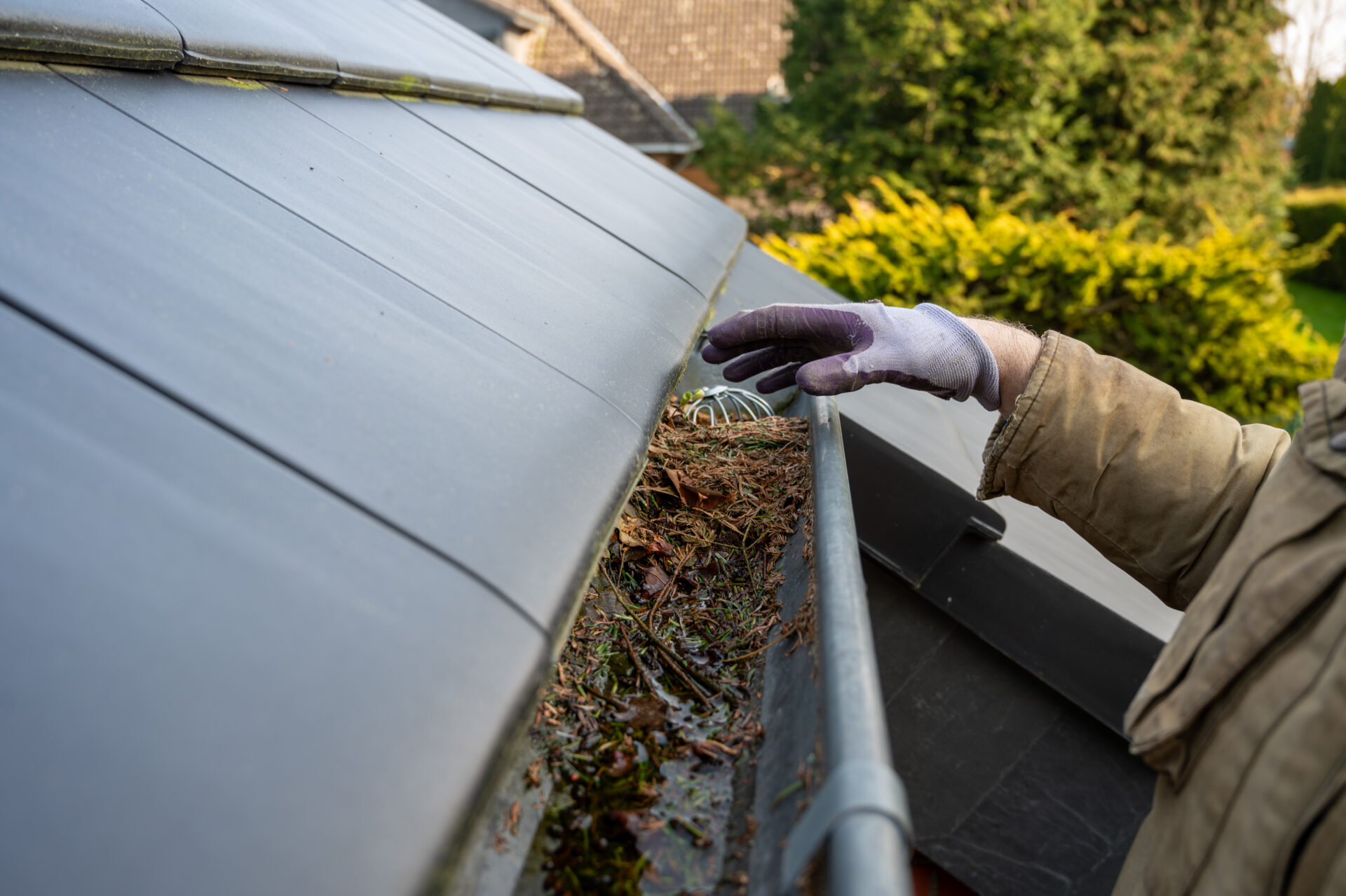
- Debris buildup that stays compacted due to constant moisture
- Low spots or improper pitch that become more noticeable with prolonged flow
- Loose fasteners or seams stressed by repeated water weight
Unlike brief summer downpours, winter rain keeps water moving through (or sitting in) the system for longer periods. Over weeks and months, that cumulative exposure gives water more chances to travel where it doesn’t belong.
How does standing water damage gutters over time?
When gutters aren’t directing water properly, moisture doesn’t simply appear and disappear. It lingers, seeps and gives small issues room to grow. So, where does that water go when gutters don’t drain properly?
When water isn’t carried away efficiently, it can slip behind gutters, run down exterior walls or settle near the base of the home. Homeowners may only notice subtle signs at first. This looks like discolored trim, soft soil near the foundation, or landscaping that never seems to fully dry out.
By the time interior signs appear, the issue has usually been developing for quite some time.
Delaying gutter repairs often makes things worse.
One of the biggest “hidden costs” homeowners face isn’t just financial. It’s timing.
Small gutter adjustments are usually quick and minimally disruptive. Larger repairs, on the other hand, often require more scheduling, coordination and inconvenience. Winter weather doesn’t make that process easier, either.
Addressing issues early typically means fewer surprises later. If your gutters showed signs of trouble earlier this winter or if something just doesn’t seem quite right, having them looked at now can help prevent much bigger headaches down the road.
Take the Next Step in Rainwater Management
Many fixes are quick, especially when handled early. Our local gutter installation and repair team can inspect your gutters, recommend gutter guards and ensure everything is functioning properly. Contact us today for an inspection or to learn how we can help protect your home year-round.